
PRESS RELEASE: Why Honoring “Ugly History” Matters. Confronting the First Salute 250th Anniversary on St. Eustatius
St. Eustatius, November 16, 2026
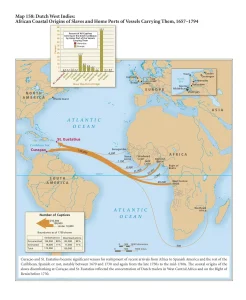
In the year of the First Salute, 1776, at least six ships called at St. Eustatius: the vessel Haast U Langzaam, arriving from Suriname with 200 of our Ancestors on board; the vessel Vrouw S. Catharina coming from Berbice with 90 of our Ancestors on board; again the vessel Haast U Langzaam, this time traveling from Zeeland, the Netherlands, to Cape Lahou (Ivory Coast) and then to Statia, carrying 249 of our Ancestors on board; the vessel The Ranger arriving from St. Kitts, with 34 of our Ancestors on board; the vessel Dulfair, arriving from Barbados with 101 of our Ancestors on board; and the vessel Susana transporting 41 of our Ancestors from Statia to Mole Saint Nicolas (Haiti). These are just the recorded voyages; unrecorded voyages were many and had a much higher death toll.
On these six voyages, 33 Afrikan captives lost their lives due to dysentery, to suffocation, to being denied water and food, to physical torture, to jettisoning, or to violent crackdowns of acts of revolt. The ones that survived endured systemic violence, chains, human branding, auction blocks, murdering, sexual violence, family separation, forced labor, reproductive exploitation, mutilation, whipping, and sadistic abuse targeting enslaved children.
Enslaved Afrikans in North America fought on both sides of the American Revolutionary War. They served as soldiers, spies, and laborers in the Continental Army or fled to join the British forces after being promised emancipation through proclamations like Dunmore’s. Despite these critical contributions and promises of liberty, many were returned to bondage or denied true freedom by their enslavers or the new nation after the war ended.
Public remembrance must reject sanitized narratives and commit to preserving the complete, unvarnished truth of the Afrikan diaspora’s history. It cannot erase the brutal reality of the transatlantic slave trade: the trafficking in enslaved Afrikans, and the minimization of the profound generational trauma caused by chattel slavery.
The former Prime-minister Rutte and the Dutch king both apologized for the crimes committed to the Afrikan people but refused to discuss reparations, structural investments in building long-term public infrastructure, psychological healing, historical accountability, and relieving structural burdens rooted in colonial exploitation.
Kenneth Cuvalay, president of the St. Eustatius Afrikan Burial Ground Alliance (in short ‘Alliance’): “Many people in St. Eustatius are opposed to the First Salute celebrations, claiming it’s not their history. The community was never consulted on the matter. The Dutch government is executing a 2018 parliamentary motion submitted in The Hague. Already in 2024, we had several meetings with representatives of the ministries of Kingdom Relations and Education, Culture, and Science to express our concerns. The Alliance has openly opposed this celebration to the First Salute steering committee and members of the executive council of St. Eustatius.”
Celebrating the First Salute continues to promote a colonial narrative rooted in an era of brutal crimes against humanity, both in Statia and the United States. Adding memorial spaces does not resolve this fundamental contradiction. Rather than offering meaningful accountability, these symbolic gestures are being used to legitimize and push forward a celebration that lacks the consent of the local community.
What improvements in housing, jobs, healthcare, cost of living, and decolonized education will benefit the community after all visitors leave Statia? It’s great to honor our freedom fighters, but we also need to confront the systems that perpetuate inequity. Afrikan people across the globe continue to experience systemic inequality, economic disparity, and racial discrimination.
We need to tell the story of our Ancestors in all its ugliness, not romanticize it. By acknowledging generational trauma, we can break the cycle of repeating destructive patterns from the past. Telling the “ugly story” honors real resistance. Telling the “ugly story” is the only way to reclaim our full identity. Telling the “ugly story” can support our youngsters who are struggling. Only the complete truth can set us free.
The Alliance invites the Statia government and responsible ministries in the Hague to collaborate on this together and invest in grassroots cooperation.
—–
*The First Salute 250th-anniversary commemoration is taking place on November 16, 2026, on Sint Eustatius to mark the 1776 cannon salute from Fort Oranje to the American warship Andrew Doria, which is widely recognized as the first international acknowledgment of the United States flag.
Photo credits: Eltis, D., & Richardson, D. (2010). Atlas of the Transatlantic Slave Trade. Yale University Press (map 158)